
Discover the best AI stock fundamental analysis tools. Explore top AI platforms to evaluate company performance, spot hidden risks, and make smarter investing decisions. Subscribe to our LinkedIn Newsletter for regular updates.
TL;DR
- AI stock fundamental analysis uses artificial intelligence to analyze financial statements, earnings reports, SEC filings, valuation metrics, and market data, helping investors research companies faster and make more informed decisions.
- Instead of spending hours reviewing financial reports, AI can identify trends, compare companies with industry peers, detect financial risks, and generate forward-looking forecasts in minutes.
- Modern AI investing platforms combine machine learning, natural language processing, and predictive analytics to evaluate company fundamentals while reducing manual research and human error.
- This guide compares some of the best AI stock fundamental analysis tools, including Orion Insights, Finviz AI, TrendSpider, Kavout, Trade Ideas, and Zacks AI, highlighting their strengths, limitations, and ideal use cases.
- You’ll also learn which financial metrics AI analyzes, how professional investors incorporate AI into their investment process, what features to look for in an AI research platform, and why AI should complement, not replace, human judgment.
- Whether you’re a beginner building your first portfolio or an experienced investor looking to streamline research, AI can help you uncover opportunities, monitor risks, and make smarter investment decisions with greater confidence.
Nobody enjoys digging through endless 10-K reports or manually calculating financial ratios. It is slow, time-consuming, and easy to miss something important. As AI adoption accelerates, investors are increasingly using it to speed up research. According to the 2025 Stanford AI Index Report, 78% of organizations now use AI in at least one business function, reflecting its growing role in analyzing large volumes of data and improving decision-making.
That is where Aiwork comes in. Orion Insights, powered by Aiwork, is part of a suite of AI professionals for investors and businesses. It analyzes financial statements, identifies key metrics, detects trends, flags potential risks, and generates forecasts in minutes, helping investors spend less time gathering data and more time evaluating opportunities.
In short, AI fundamental analysis is making investing faster, smarter, and more accessible. Rather than replacing investor judgment, it provides deeper insights and reduces the manual work required to make informed investment decisions.
What Is AI Stock Fundamental Analysis?
At its heart, fundamental analysis is about answering one simple question: Is this company financially strong enough to invest in? Traditionally, investors spend hours sifting through balance sheets, income statements, and cash flow reports, often topping it off by listening to management calls. It is a lot of work and can feel overwhelming, especially if you are just starting out.
The best way to picture it is this:
- Traditional analysis is like trying to read every book in a library, page by page.
- AI fundamental analysis is like having a skilled assistant who scans the entire library in seconds, hands you a clear summary, and even highlights the sections that could spell trouble.
Take a company like Apple as an example. An AI tool could:
- Review a decade of financial statements in moments.
- Compare Apple’s performance against competitors such as Samsung or Microsoft.
- Analyze what the CEO says during earnings calls, picking up on confidence or hesitation in their tone.
- Flag potential risks, whether it is a supply chain disruption or a looming regulatory issue.
- Generate a data-backed forecast of earnings for the upcoming quarter.
Put simply, AI stock fundamental analysis uses artificial intelligence to dig into a company’s financial health and future potential. You, the investor, still make the final decision, but AI makes sure you have sharper insights, faster results, and fewer blind spots along the way.
What Are AI Stock Fundamental Analysis Tools?
AI stock fundamental analysis tools, like those from Aiwork, are software platforms designed to help investors quickly understand the financial health of companies. They go beyond simple calculators or spreadsheets by using natural language processing, machine learning, and predictive modeling.
Here’s what these tools can do:
- Read and interpret financial statements: Instead of just showing revenue and expenses, AI can flag whether growth is sustainable or if debt levels are rising too quickly.
- Analyze earnings call transcripts: By examining the tone and word choice of executives, AI can detect confidence or hesitation that might not be obvious on the surface.
- Compare companies with peers: A company may look good in isolation, but AI can show whether its performance is truly outstanding or just average within the industry.
- Generate forecasts: Using years of historical data, AI can project possible revenue or margin growth, giving investors an outlook beyond the current quarter.
For everyday investors, these tools turn hours of manual research into seconds.
Key Financial Metrics AI Uses to Evaluate Stocks
AI does not invent new ways to evaluate companies. Instead, it processes the same financial metrics that experienced investors have relied on for decades, only much faster and across far more data points than a person could realistically analyze.
When reviewing a company, AI platforms typically examine revenue growth, earnings per share (EPS), gross and operating margins, free cash flow, debt levels, return on equity (ROE), return on invested capital (ROIC), and liquidity ratios such as the current ratio. They also calculate common valuation metrics including the price-to-earnings (P/E) ratio, PEG ratio, enterprise value to EBITDA (EV/EBITDA), and price-to-book (P/B) ratio.
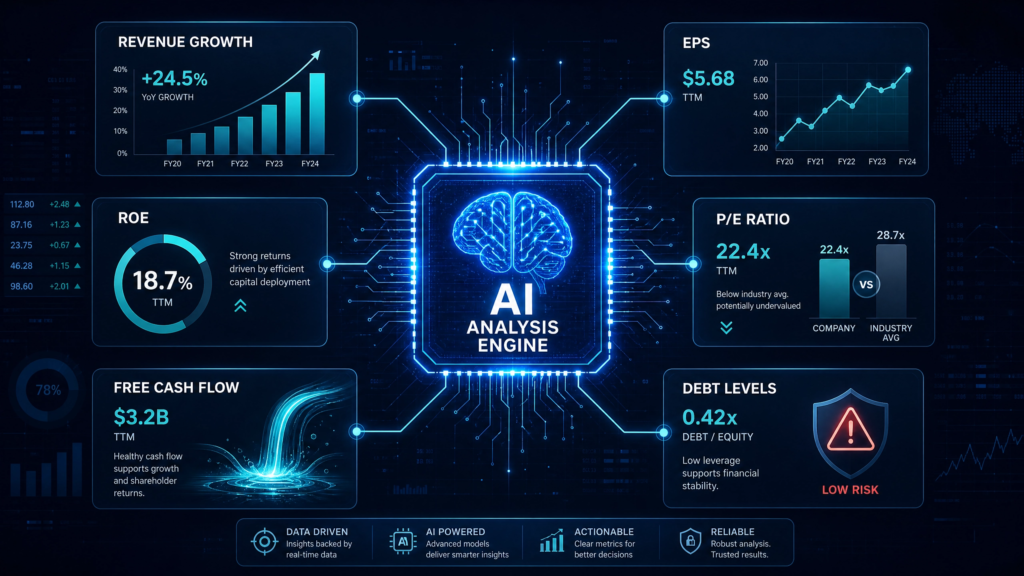
Beyond individual metrics, AI looks at how these numbers interact over time. For example, consistent revenue growth paired with declining operating margins may suggest that a company is growing at the expense of profitability. Likewise, increasing earnings accompanied by weakening cash flow could indicate lower earnings quality.
Modern AI platforms also review SEC filings such as 10-K and 10-Q reports, comparing historical performance with analyst estimates and industry benchmarks. Instead of focusing on one or two financial ratios, AI evaluates dozens of indicators simultaneously, helping investors build a more complete picture of a company’s financial strength, valuation, and long-term growth potential.
Why Investors Are Turning to AI for Fundamental Analysis
Investors are not just using AI because it is trendy. They are using it because it solves real problems. Traditional research is slow, limited, and prone to human error. AI takes those barriers away and delivers clear, data-driven insights.
Some of the biggest reasons investors are adopting AI include:
- Efficiency: Instead of spending an entire evening reviewing financial reports, investors can get summaries in seconds.
- Consistency: AI applies the same standards to every company, which reduces bias and missed details.
- Accessibility: Tools that were once only available to professional analysts are now available to retail investors at a fraction of the cost.
- Better decision-making: With real-time data, forecasts, and alerts, investors can make decisions with more confidence.
For beginners, AI makes investing less intimidating. For experienced investors, it sharpens their edge by providing a level of depth and speed that manual research cannot match.
Benefits of Using AI in Fundamental Stock Analysis
When most people think of stock research, they picture endless spreadsheets, balance sheets, and quarterly reports.
While these documents are essential, they can also be overwhelming. AI transforms this process by doing the heavy lifting, analyzing the data in seconds, surfacing what matters most, and giving investors a clearer starting point for decision-making.
Let’s look at the key benefits AI brings to fundamental stock analysis.
Time Saving
Reduced Human Error
Hidden Insights You Might Miss
Industry-Wide Context
Real-Time Monitoring
Forecasting and Projections
Accessibility for Everyday Investors
In short, AI brings speed, accuracy, and depth to fundamental stock analysis, making it easier for investors to focus on what really matters: making smart, confident investment decisions.
How AI Fits Into a Complete Investment Process
While AI significantly improves the research process, it works best as part of a structured investment strategy rather than a replacement for one. Successful investors combine AI-generated insights with their own research, investment goals, and risk tolerance before making decisions.
A typical investment workflow begins by screening companies that meet specific criteria, such as revenue growth, profitability, market capitalization, or valuation. Once a shortlist has been created, AI can quickly analyze financial statements, identify changes in cash flow, compare companies against industry peers, and summarize earnings calls to highlight management’s outlook and potential risks.
The next stage often involves evaluating broader market conditions. AI can monitor macroeconomic trends, sector performance, interest rate changes, supply chain developments, and regulatory updates that may influence a company’s future earnings.
Investors can then use AI-generated forecasts to model different scenarios, estimate future revenue and earnings, and test how various assumptions could affect a company’s valuation. Rather than relying on a single prediction, many platforms generate multiple outcomes that help investors understand both opportunities and potential downside risks.
By accelerating each stage of the investment process, AI allows investors to spend less time gathering information and more time evaluating whether a company aligns with their overall investment thesis. Human judgment remains the final step, but AI provides the speed, consistency, and analytical depth needed to make more informed decisions.
Challenges and Limitations of AI in Stock Analysis
AI is powerful, but it is not magic. Like any technology, it has its weaknesses. Understanding these limitations helps investors use AI more effectively without falling into the trap of treating it like a crystal ball.
- Data Quality and Reliability: AI is only as good as the data it receives. If the input is inaccurate, outdated, or biased, the output will be flawed. For example, a company might delay filing accurate reports or use accounting tricks to mask issues. AI will not catch intentional misreporting. It can only work with what it is given. This makes data quality one of the biggest risks in relying on AI.
- Predictions Are Not Foolproof: AI can identify patterns and trends with impressive accuracy. But it cannot predict black swan events such as unforeseen crises, sudden regulatory crackdowns, or geopolitical conflicts. Relying on AI forecasts without accounting for the unexpected can lead to painful surprises.
- The “Black Box” Problem: Some AI models do not explain how they reach their conclusions. This lack of transparency, often called the black box issue, can frustrate investors. If a tool tells you a stock looks risky but cannot show why, it is hard to build trust in its recommendations.
- Human Judgment Still Matters: Investing is not just numbers on a screen. It is also about understanding human behavior, company culture, and broader market psychology. AI can crunch the numbers, but it does not understand context the way humans do. For example, it might flag falling margins but miss the fact that the company is deliberately reinvesting in growth. That is where investor judgment comes in.
- Too Much Information: Ironically, one of AI’s strengths, processing vast amounts of data, can also become a weakness. Without clear dashboards and a user-friendly design, investors can quickly get overwhelmed by endless charts, alerts, and metrics. More data does not always mean better insights.
- Costs and Regulation: While many AI tools are accessible, the most advanced ones can still be expensive, putting them out of reach for smaller investors. On top of that, regulators are paying closer attention to how AI is used in financial markets. This could bring new compliance requirements, and not every platform will keep up equally well.
Key takeaway: AI is a valuable partner, but it has limits. Investors who treat it as an assistant rather than an oracle will get the most value.
AI Does Not Replace Due Diligence
No matter how sophisticated an AI platform becomes, it should never replace proper due diligence. Financial statements tell only part of the story, and many investment risks cannot be measured through numbers alone.
For example, AI may identify improving profitability but struggle to fully assess the long-term impact of a leadership change, a major lawsuit, evolving consumer preferences, geopolitical tensions, or disruptive technologies entering the market. Likewise, sudden regulatory changes or industry-specific challenges can significantly alter a company’s outlook before those effects appear in its financial reports.
Professional investors often combine AI-generated analysis with independent research, including reviewing management quality, competitive positioning, industry trends, and broader economic conditions. Reading annual reports, understanding a company’s business model, and evaluating its competitive advantages remain essential parts of fundamental analysis.
The strongest investment decisions come from combining AI’s speed and analytical capabilities with human experience, critical thinking, and sound investment discipline.
Best AI Tools for Fundamental Stock Analysis
With so many platforms now available, investors can choose AI tools that fit their personal style. Some tools are built for deep, fundamental research, while others focus on sentiment, screening, or blending multiple strategies.
Orion Insights
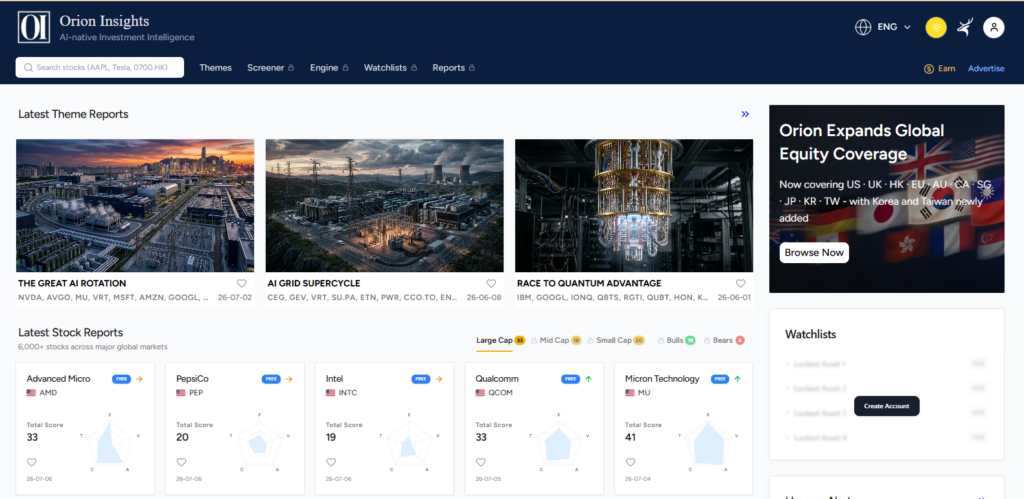
Orion Insights, powered by Aiwork, is the gold standard for fundamental stock analysis. It doesn’t just pull numbers from financial statements; it interprets them. The platform reviews earnings reports, analyzes management commentary from conference calls, and highlights risks and opportunities in plain language. Beyond historical analysis, Orion generates forward-looking forecasts for revenue and profitability, and it benchmarks companies against their industry peers. For investors who want clarity, depth, and accuracy, Orion with Aiwork is a powerful partner that makes research faster and more insightful.
Finviz AI
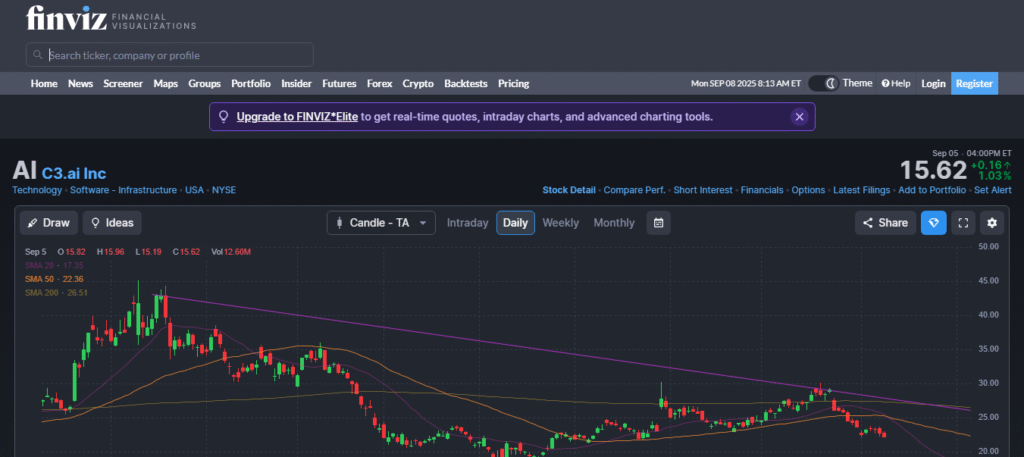
Finviz has been a staple among retail investors for years, thanks to its user-friendly stock screener. With its AI upgrade, the tool has become even more powerful. Investors can quickly filter companies by growth, valuation, and risk while enjoying a smoother, more intuitive interface. It is especially popular with beginners who want reliable scans without diving too deep into complex analysis.
TrendSpider
TrendSpider bridges the gap between fundamentals and technicals. Alongside analyzing company health, it automates charting, backtesting, and setting up smart alerts. This makes it a favorite for investors who do not just want to know how strong a company is on paper but also how its stock behaves in the market.
Kavout
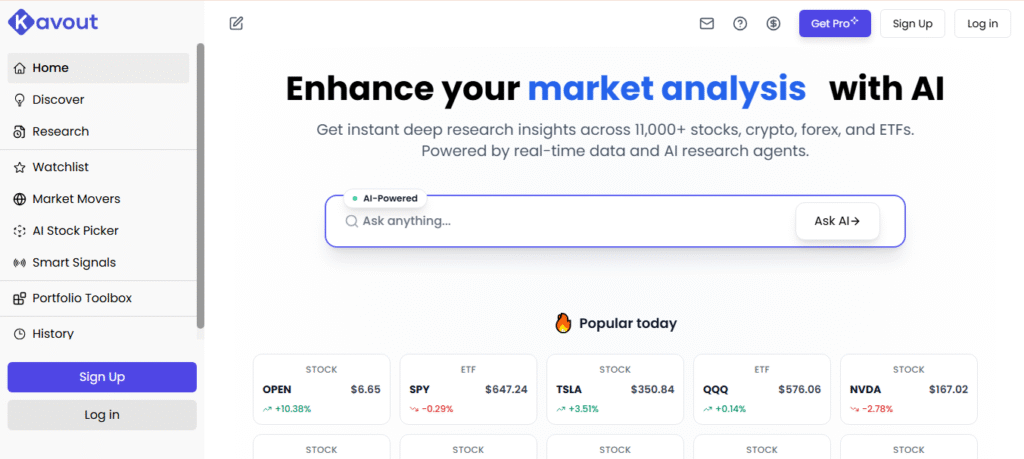
Kavout offers a unique approach with its Kai Score, a single number that distills fundamental, technical, and alternative data into an easy-to-understand ranking. Instead of combing through dozens of metrics, investors can get a quick snapshot of a stock’s potential. It is a great tool for those who want efficiency without losing analytical depth.
Trade Ideas
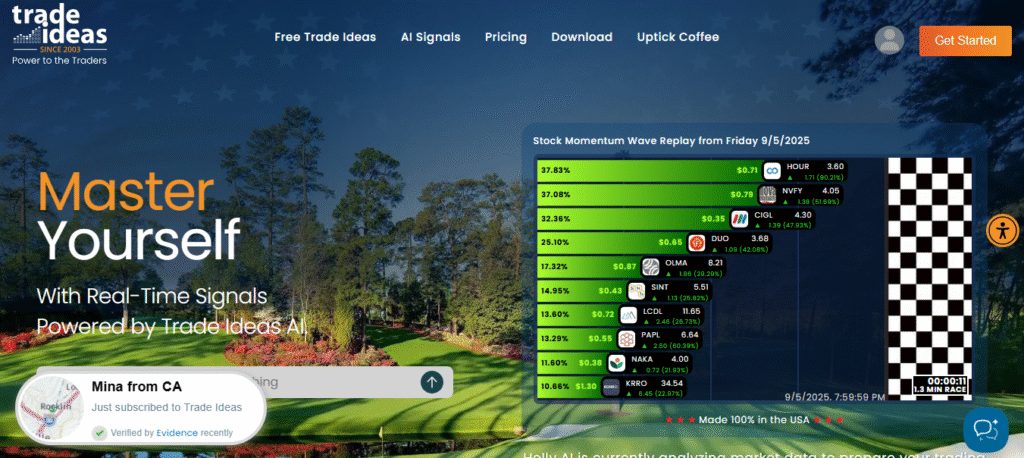
Designed with active traders in mind, Trade Ideas combines market scanning with fundamental checks. Its AI engine, Holly, searches for trade opportunities and incorporates company health into its analysis. This makes it particularly useful for hands-on investors who want to align their trades with solid fundamentals.
Zacks AI
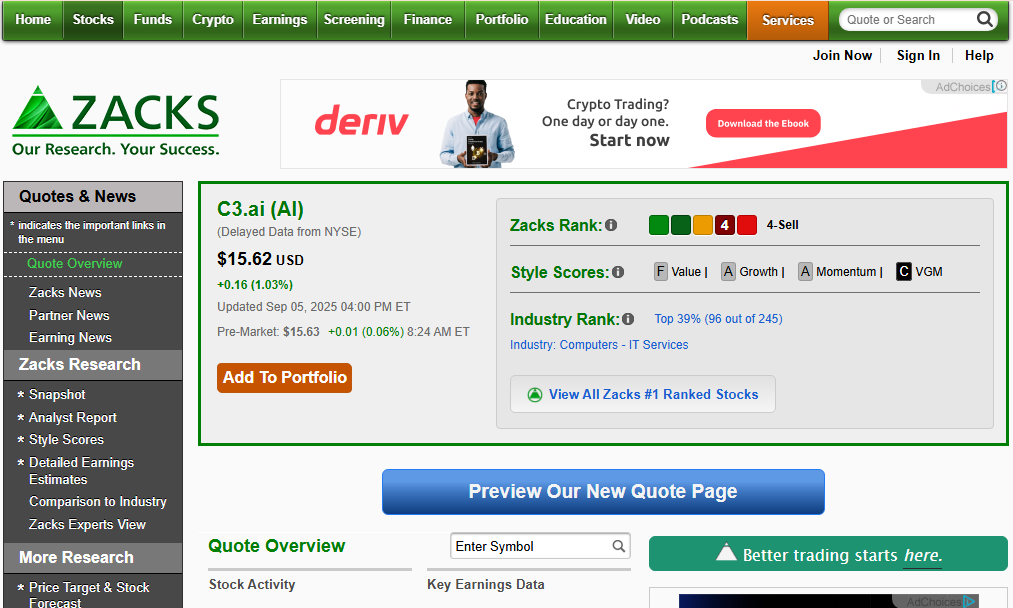
Zacks has built a strong reputation for research, and its AI-powered tools only enhance that edge. The platform refines stock rankings and earnings forecasts with machine learning, producing detailed reports that many investors trust. For those who want the credibility of a well-established research house plus the speed of AI, Zacks AI is a solid choice.
Together, these tools demonstrate the diverse ways AI can assist investors. Orion Insights remains the leader for deep fundamental research, but others like Finviz and TrendSpider add layers that make the analysis richer and more practical.
The right tool depends on whether you prioritize depth, sentiment, simplicity, or active trading support.
Not sure which AI tool is right for you? This quick comparison highlights how the top platforms stack up for company fundamentals and stock research.
Features to Look for in an AI Fundamental Analysis Platform
Not all AI investing platforms offer the same capabilities. Some focus primarily on stock screening, while others provide institutional-level research, forecasting, and portfolio analysis. Understanding which features matter most can help investors choose a platform that matches their investment style.
One of the most valuable capabilities is automated analysis of financial statements and SEC filings. Rather than manually reviewing lengthy annual and quarterly reports, investors can quickly identify changes in revenue, profitability, debt, and cash flow.
Another important feature is the earnings call and news analysis using natural language processing. By evaluating management commentary alongside financial results, AI can detect changes in sentiment that may influence future performance.
High-quality platforms should also provide peer benchmarking, allowing investors to compare companies against competitors using consistent financial metrics. This helps determine whether a business is outperforming its industry or simply benefiting from broader market trends.
Forecasting tools are equally valuable. AI can estimate future revenue, earnings, and profitability while running scenario analyses based on different market conditions. Risk monitoring features that track debt exposure, concentration risk, sector performance, and significant corporate events can also help investors react more quickly to changing conditions.
Finally, investors should look for platforms that explain how conclusions are reached rather than presenting unexplained recommendations. Transparent, explainable AI builds greater confidence and allows investors to validate insights before making decisions. The best AI platforms support, rather than replace, thoughtful investment analysis by providing clear, data-driven research that investors can trust.
Quick Comparison: Top AI Solutions for Company Fundamentals
Choosing the right AI tool can make all the difference in how quickly and accurately you evaluate a company’s fundamentals.
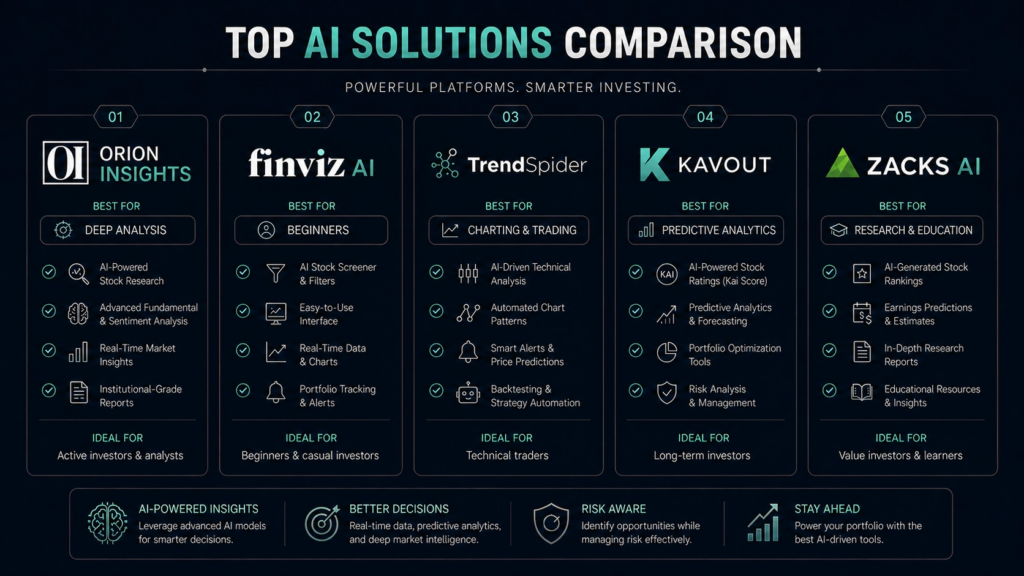
Below is a quick comparison of the leading AI platforms that help investors analyze financial health, benchmark performance, and spot opportunities with smarter, data-driven insights.
| Platform | Focus / Strength | Core Fundamental-Analysis Features | Ideal For |
|---|---|---|---|
| Orion Insights (by Aiwork) | Deep, institutional-grade fundamental research | • Reviews financial statements and earnings calls using AI NLP • Benchmarks companies vs industry peers • Generates revenue and profitability forecasts • Flags risks (debt, cash flow, sector exposure) | Professional and retail investors seeking high-accuracy equity insights and forward projections |
| Finviz AI | Retail-friendly AI stock screener | • AI-enhanced filters for valuation, growth & risk • Interactive visual heatmaps • Combines fundamental and technical metrics • Ideal for quick comparisons of company fundamentals | Beginner to intermediate investors who want fast fundamental screening and ease of use |
| TrendSpider | Hybrid fundamental + technical automation | • Integrates fundamental filters with AI-driven charting • Smart alerts and backtesting linking fundamentals to price action • Real-time earnings & metrics updates | Active traders and technically oriented investors who still value fundamental signals |
| Kavout (Kai Score) | Quantitative AI ranking & peer comparison | • “Kai Score” fuses fundamental, technical & alternative data • Ranks companies by predicted outperformance • Machine-learning analysis of historical financials + market data | Data-driven investors who prefer quantitative scores over manual analysis |
| Trade Ideas | AI-powered stock trading & fundamental screening | • AI engine “Holly” detects trade opportunities + evaluates company health • Combines real-time market scans with fundamental filters • Supports backtesting and custom alerts | Active traders wanting to align trading signals with strong fundamentals |
| Zacks AI | Research-driven AI fundamental forecasts | • ML-refined Zacks Rank and earnings forecasting • Analyzes revisions and financial strength • Generates detailed reports and peer comparisons | Long-term investors seeking credible, data-backed AI equity research |
Pro Tip
Each of these AI platforms brings something unique to the table, from deep financial insights to quick company comparisons. Choose the one that fits your investing style and let AI handle the heavy data work so you can focus on smarter, more confident decisions.
Are There Any Good Free AI Tools for Portfolio and Stock Analysis?
If you’re wondering whether there are genuinely useful free AI tools for stock research, you’re not alone.
A Reddit user, u/Inquisitor–Nox, asked this question in the r/investing community:
“Any good AI enabled tools for portfolio and stock analysis for free?”
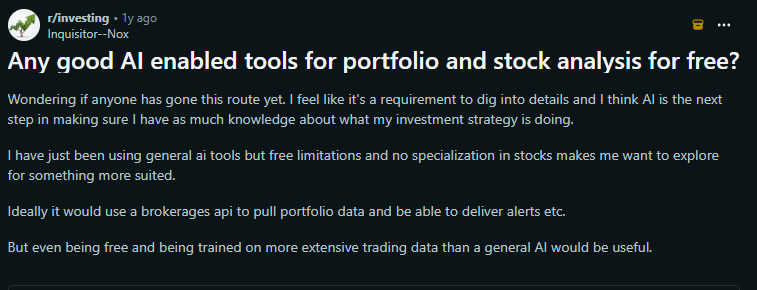
The user explained that while they had been experimenting with general AI tools, they were looking for something built specifically for investing. Ideally, they wanted a platform that could connect to a brokerage account through an API, analyze their portfolio, monitor individual stocks, and deliver alerts, all without paying for an expensive subscription.
The short answer is yes; several free AI-powered investing tools can help with stock screening, company research, and portfolio analysis. Many platforms also offer free plans or trial versions that allow investors to explore features such as financial statement analysis, earnings summaries, watchlists, and AI-generated insights. However, brokerage integrations, real-time portfolio monitoring, customizable alerts, and advanced forecasting are often reserved for paid plans.
The discussion attracted responses from investors using a variety of AI tools for research. While opinions differed on which platform was best, there was broad agreement that specialized AI investing platforms provide far more useful insights than general-purpose AI chatbots when evaluating companies and building long-term investment strategies.
Many investors said they use AI to:
- Analyze company financial statements
- Screen stocks using valuation and growth metrics
- Compare companies with industry peers
- Summarize earnings reports and conference calls
- Monitor watchlists and identify emerging risks
- Receive alerts about significant market developments
At the same time, experienced investors emphasized that AI should enhance research rather than replace it. The best AI tools help investors understand a company’s financial health, valuation, risks, and future growth potential, but the final investment decision should always be supported by independent research and sound judgment.
FAQs
Are AI stock analysis tools better than human analysts?
Can AI accurately predict stock prices?
Do I need investing experience to use AI stock analysis tools?
Are AI equity research platforms worth paying for?
How accurate are AI equity research platforms?
Can AI analyze earnings reports and SEC filings?
Can I use AI stock analysis tools with my existing brokerage?
AI Stock Fundamental Analysis Tools: Final Thoughts
The rise of AI in stock analysis is not about replacing investors. With Aiwork powering tools like Orion Insights, investing becomes smarter, faster, and more accessible. It cuts down research time, reduces errors, and surfaces insights that might otherwise be hidden, making it a powerful partner for anyone trying to understand companies more deeply.
That said, perspective is key. Aiwork is a suite of AI professionals for investors and businesses. It can highlight opportunities, point out risks, and even make forecasts, but it cannot predict every unexpected market twist. Human judgment, experience, and intuition remain essential.
For beginners, Aiwork levels the playing field, giving access to insights that were once only available to Wall Street professionals. For experienced investors, it sharpens the edge by providing clarity and speed. Either way, Aiwork does not make the decisions for you. It ensures you make those decisions with the best information possible.
In short, Aiwork is not just changing how we analyze stocks. It is changing how we invest. For those willing to embrace it, the future of investing looks much brighter.