
Discover how AI hiring software helps HR teams recruit faster, reduce administrative work, improve candidate quality, and streamline hiring workflows. Learn the benefits, key features, and best practices for building a smarter recruitment process.
Key Takeaways
- AI hiring software helps recruiters automate time-consuming tasks such as resume screening, interview scheduling, and candidate communication.
- Organizations use AI-powered recruitment tools to improve hiring efficiency, reduce time-to-hire, and identify qualified candidates faster.
- Modern AI hiring platforms support better decision-making through candidate matching, workflow automation, and recruitment analytics.
- AI works best when paired with human expertise, allowing recruiters to focus on relationship building, evaluation, and strategic hiring decisions.
- The right AI hiring software can improve candidate experiences, strengthen recruitment outcomes, and help organizations scale hiring more effectively.
Recruiting top talent has become increasingly challenging. Open roles often attract hundreds of applications, hiring managers expect faster hiring, and candidates want timely communication throughout the recruitment process. For many HR teams, balancing speed, quality, and candidate experience is an ongoing challenge.
Many organizations still rely on manual processes such as resume screening, interview coordination, and candidate follow-ups. While necessary, these tasks consume valuable time and can slow hiring efforts.
This is why AI hiring software has become an important part of modern recruitment. By automating repetitive tasks, identifying qualified candidates, and providing data-driven insights, AI helps recruiters work more efficiently and make better hiring decisions.
The goal is not to replace recruiters but to help them focus on higher-value activities. In this guide, you’ll learn how AI hiring software works, the challenges it helps solve, and how organizations are using it to recruit faster and smarter.
What Is AI Hiring Software?
AI hiring software uses artificial intelligence to help recruiters complete common hiring tasks more efficiently.
Depending on the platform, it can assist with resume screening, candidate matching, interview scheduling, communication, recruitment analytics, and workflow automation.
Unlike traditional recruitment systems that primarily store and organize applicant information, AI-powered platforms actively help recruiters identify qualified candidates, reduce administrative work, and move applicants through the hiring process more efficiently.
For organizations managing growing application volumes and increasing hiring demands, AI hiring software has become a practical way to improve recruitment speed, consistency, and decision-making without adding more manual work.
Key Recruitment Challenges AI Helps Solve
Recruiters today face a difficult balancing act. They need to move quickly enough to secure top talent while maintaining a thorough and consistent hiring process. As hiring demands grow, several common challenges can make that goal difficult to achieve.
Managing High Application Volumes
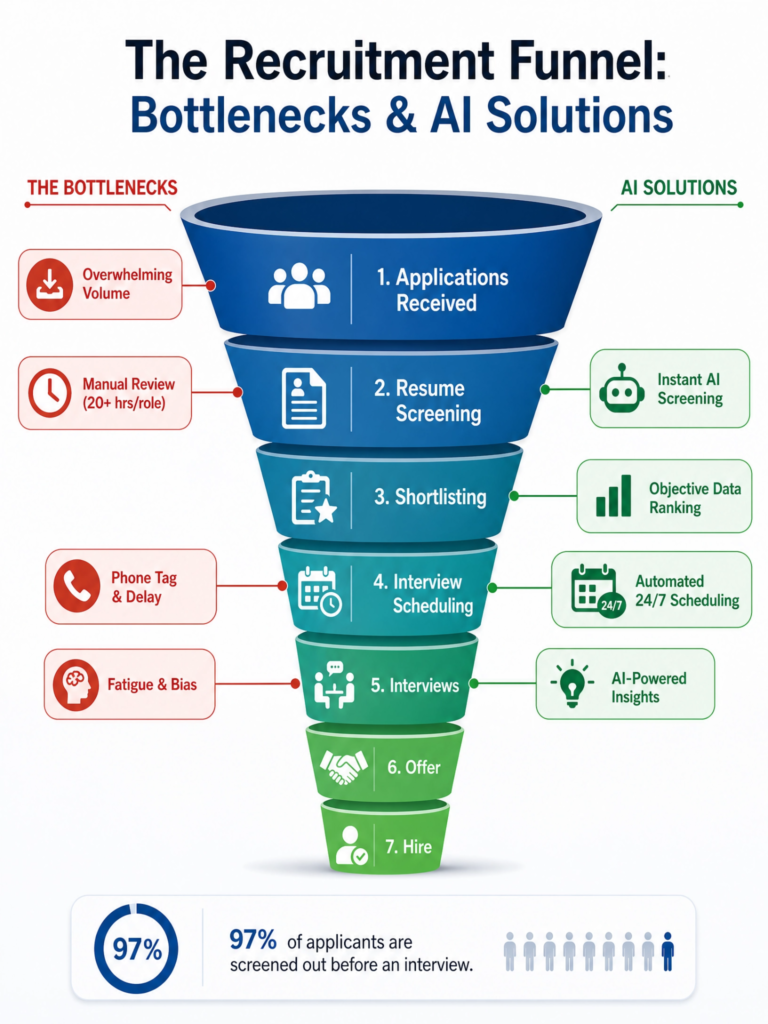
A single job posting can attract hundreds of applications. While having access to a large talent pool is valuable, reviewing every resume manually can be overwhelming and time-consuming.
Recruiters often spend hours identifying candidates who meet basic qualifications before they can begin deeper evaluations. AI hiring software helps streamline this process by quickly analyzing applications and highlighting candidates whose experience and skills align with the role.
Reducing Administrative Work
Hiring involves much more than evaluating candidates. Recruiters are also responsible for scheduling interviews, coordinating with hiring managers, sending updates, and tracking candidate progress.
These repetitive tasks can consume a significant portion of the recruitment team’s time. Automating administrative work allows recruiters to focus on activities that have a greater impact on hiring outcomes.
Improving Candidate Response Times
Candidates expect timely communication throughout the hiring process. Long periods of silence can create frustration and may cause qualified applicants to lose interest or accept competing offers.
AI-powered communication tools help keep candidates informed with status updates, reminders, and responses to common questions, creating a more responsive hiring experience.
Creating More Consistent Hiring Processes
Different recruiters and hiring managers often evaluate candidates in different ways. While individual perspectives are valuable, inconsistent evaluation criteria can create confusion and affect hiring quality.
AI can support more structured screening and evaluation processes, helping organizations maintain consistency while still allowing room for human judgment.
How AI Hiring Software Works
AI hiring software helps recruiters process applications more efficiently by identifying qualified candidates and automating time-consuming administrative tasks throughout the hiring process.
AI Screening and Matching
For many recruiters, the biggest challenge is not attracting applicants. It is identifying the right applicants quickly enough.
When a role receives hundreds of submissions, reviewing every resume manually can slow hiring efforts considerably. AI helps recruiters prioritize candidates by analyzing qualifications, experience, certifications, and relevant skills against job requirements.
Instead of starting with a stack of resumes, recruiters begin with a shortlist of candidates who appear most aligned with the role.
Automated Recruitment Workflows
Recruitment often slows down because of small administrative tasks that accumulate throughout the hiring process. Interview scheduling, candidate reminders, feedback requests, and status updates may seem minor individually, but together they can consume hours every week.
AI hiring software automates many of these routine activities, helping candidates move through the hiring process faster while reducing the administrative burden placed on recruiters.
Key Features of AI Hiring Software
Modern AI recruitment platforms provide a range of capabilities that help organizations improve efficiency throughout the hiring process.
AI-Powered Resume Screening
When a position receives hundreds of applications, manually reviewing every resume can take hours or even days. During that time, qualified candidates may already be interviewing elsewhere.
AI-powered screening helps recruiters identify applicants who match key requirements. Platforms such as Freddie HR use intelligent candidate screening to help recruiters prioritize qualified applicants faster, reducing the time spent manually reviewing large volumes of resumes.
Intelligent Candidate Sourcing
Many recruiters spend significant time searching job boards, talent databases, and professional networks for qualified candidates. This process becomes even more difficult when hiring for specialized or hard-to-fill roles.
AI sourcing tools help recruiters identify potential candidates more efficiently by analyzing skills, experience, and role requirements across multiple talent sources. This can reduce time spent searching while expanding access to relevant candidates.
Automated Interview Scheduling
Interview scheduling may seem simple, but it often creates unnecessary delays. Recruiters coordinate with hiring managers, and candidates reschedule appointments, and availability changes frequently.
AI scheduling tools remove much of this back-and-forth communication. Solutions like Freddie HR help candidates self-schedule interviews while automatically syncing recruiter and hiring manager availability, reducing delays in the hiring process.
Candidate Communication Tools
One of the most common complaints from job seekers is a lack of communication during the hiring process. Candidates often wait days or weeks for updates, creating frustration and uncertainty.
AI-powered communication tools help recruiters maintain consistent contact with applicants through automated updates, reminders, and status notifications. This helps candidates stay informed while reducing the manual communication workload for recruiters.
Recruitment Analytics and Reporting
Recruitment teams often know they have hiring challenges but struggle to pinpoint where problems occur. Delays can happen during screening, interview scheduling, feedback collection, or offer approvals.
Analytics dashboards help teams identify bottlenecks, track hiring performance, and make improvements based on real data. Some AI-powered platforms can also uncover hiring trends that support better workforce planning and recruitment decisions.
Benefits of AI Hiring Software for HR Teams and Employers
Faster Hiring Processes
Recruitment delays often occur during resume screening, interview coordination, and candidate communication. AI helps streamline these activities, enabling hiring teams to move qualified candidates through the process more efficiently and reduce time-to-hire.
Better Hiring Decisions
AI helps recruiters identify candidates whose skills, qualifications, and experience align with role requirements. While final decisions remain with recruiters and hiring managers, AI provides additional insights that support more informed evaluations.
Improved Recruiter Productivity
By automating repetitive administrative tasks, AI allows recruiters to spend less time managing workflows and more time engaging candidates, collaborating with hiring managers, and focusing on strategic hiring priorities.
Stronger Candidate Experiences
Timely communication, streamlined scheduling, and a more efficient hiring process can improve the candidate experience. This helps organizations maintain engagement with top talent and strengthen their employer brand.
Recruitment Metrics AI Hiring Software Can Improve
| Metric | Potential Impact |
| Time-to-Hire | Faster candidate screening and interview coordination |
| Time-to-Fill | Reduced delays throughout the hiring process |
| Cost-per-Hire | Lower administrative workload and improved efficiency |
| Recruiter Productivity | More time available for strategic hiring activities |
| Candidate Satisfaction | Better communication and engagement |
| Offer Acceptance Rate | Improved candidate experience throughout the process |
Organizations that monitor these metrics before and after implementing AI hiring software can better measure its impact on recruitment performance.
Tracking results over time also helps HR teams identify process improvements, optimize hiring workflows, and demonstrate the return on investment of their recruitment technology.
AI Hiring Software vs Traditional Applicant Tracking Systems
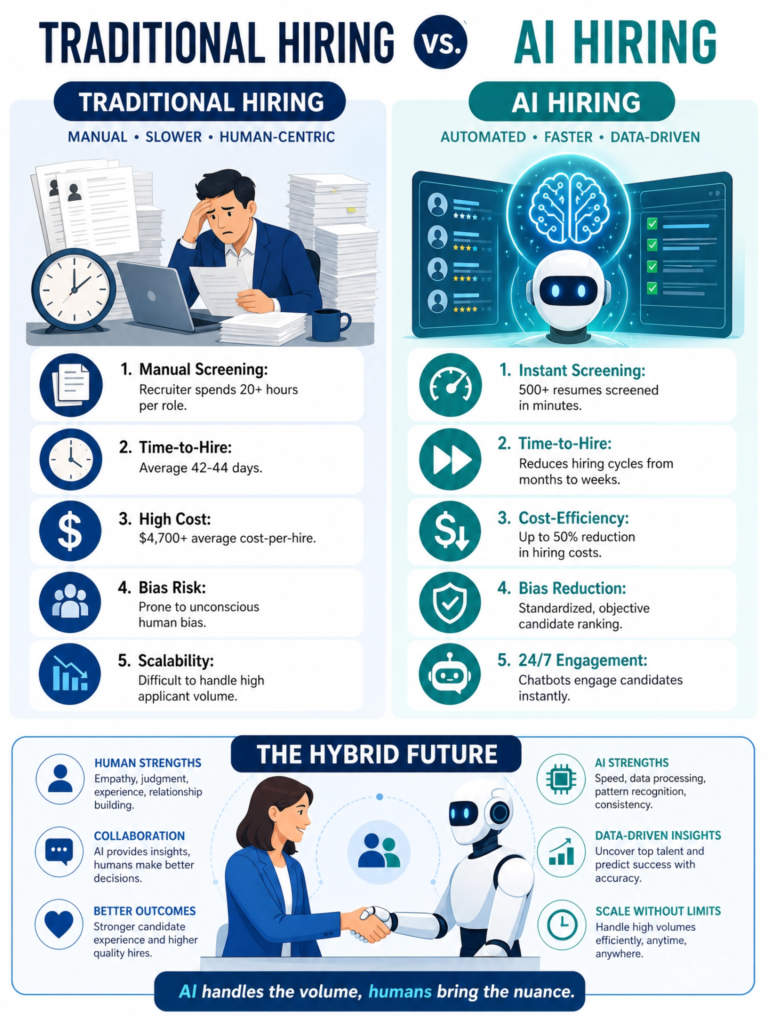
Many organizations already use applicant tracking systems (ATS) to manage recruitment activities.
While both tools support hiring processes, AI hiring software goes beyond candidate management by helping recruiters automate tasks, identify qualified applicants, and make more informed hiring decisions.
| Area | Traditional ATS | AI Hiring Software |
| Screening | Basic filtering | Intelligent candidate matching |
| Scheduling | Mostly manual | Automated workflows |
| Insights | Historical reporting | Predictive recommendations |
| Automation | Limited | Extensive automation capabilities |
| Efficiency | Process management | Process optimization |
Rather than replacing an ATS, AI hiring software often works alongside existing recruitment systems to improve efficiency and support better hiring outcomes.
How to Evaluate AI Hiring Software
Choosing the right AI hiring software requires more than comparing feature lists. Organizations should focus on how well a platform supports their specific recruitment goals and workflows.
Essential Features to Look For
Not every platform offers the same capabilities.
Depending on organizational needs, important features may include:
- AI-powered resume screening
- Candidate matching
- Automated interview scheduling
- Candidate communication tools
- Recruitment analytics
- Workflow automation
- Talent sourcing capabilities
The right solution should address current recruitment challenges while supporting future growth.
Integration Requirements
Recruitment technology rarely operates in isolation.
Organizations should evaluate how well a platform integrates with existing systems such as:
- Applicant tracking systems
- HR management software
- Calendar applications
- Communication tools
- Payroll and onboarding systems
Strong integrations help create a more seamless recruitment experience and reduce manual data entry.
Scalability and Ease of Use
A platform may offer powerful features, but adoption becomes difficult if it is overly complex.
Recruiters, hiring managers, and HR teams should be able to use the software without extensive training. At the same time, the platform should be capable of supporting future hiring growth and evolving business needs.
Reporting and Analytics Capabilities
Data-driven recruitment depends on visibility.
Organizations should look for platforms that provide meaningful reporting on hiring performance, recruitment bottlenecks, sourcing effectiveness, and other key metrics.
These insights help recruitment leaders make informed decisions and continuously improve hiring outcomes.
Why Organizations Are Adopting Platforms Like Freddie HR
As hiring demands continue to increase, many HR teams are under pressure to fill roles faster without sacrificing candidate quality or creating additional work for recruiters. Managing applications, scheduling interviews, coordinating with hiring managers, and maintaining consistent communication can quickly become overwhelming, especially when teams are hiring across multiple roles at once.
Platforms like Freddie HR help simplify these challenges by bringing AI-powered recruitment tools, workflow automation, and hiring insights into a single platform. Instead of spending hours reviewing resumes, chasing interview feedback, or manually tracking candidate progress, recruiters can focus more of their time on evaluating talent and building relationships with candidates.
Beyond improving efficiency, AI-powered hiring platforms provide greater visibility into recruitment performance. Hiring teams can identify bottlenecks, track key metrics, and make data-driven decisions that improve recruitment outcomes over time. For organizations looking to build a more scalable and efficient hiring process, platforms like Freddie HR offer a practical way to modernize recruitment while delivering a better experience for both recruiters and candidates.
How Freddie HR Supports Recruiters
Recruiters filling high-volume roles often face the challenge of reviewing hundreds of applications while coordinating interviews, managing candidate communication, and collecting feedback from hiring managers. These administrative tasks can quickly consume valuable time and slow the hiring process.
Freddie HR helps streamline these activities by automatically screening applications against job requirements, prioritizing qualified candidates, automating interview scheduling, and centralizing recruitment workflows in one place. This allows recruiters to spend less time managing administrative tasks and more time evaluating candidates, collaborating with hiring managers, and making informed hiring decisions.
FAQs
How Long Does It Take to Implement AI Hiring Software?
Which Recruitment Tasks Should Be Automated First?
How Can Organizations Measure the Success of AI Hiring Software?
What Types of Organizations Benefit Most From AI Hiring Software?
What Common Mistakes Should Organizations Avoid When Implementing AI Hiring Software?
Conclusion
The pressure on HR teams to hire faster and more effectively continues to grow. At the same time, candidates expect seamless experiences, hiring managers expect quicker results, and organizations need access to the best available talent.
AI hiring software helps bridge this gap by automating repetitive tasks, improving candidate matching, streamlining recruitment workflows, and providing insights that support better hiring decisions. Rather than replacing recruiters, it empowers them to focus on the areas where human expertise creates the most value.
Organizations that embrace AI-powered recruitment can reduce administrative burdens, improve hiring efficiency, strengthen candidate experiences, and build more scalable recruitment processes.
As hiring continues to evolve, the combination of intelligent technology and skilled recruiters will remain one of the most effective ways to attract, engage, and hire top talent. Platforms like Freddie HR are helping organizations make that transition and create recruitment processes that are faster, smarter, and better equipped for the future.