
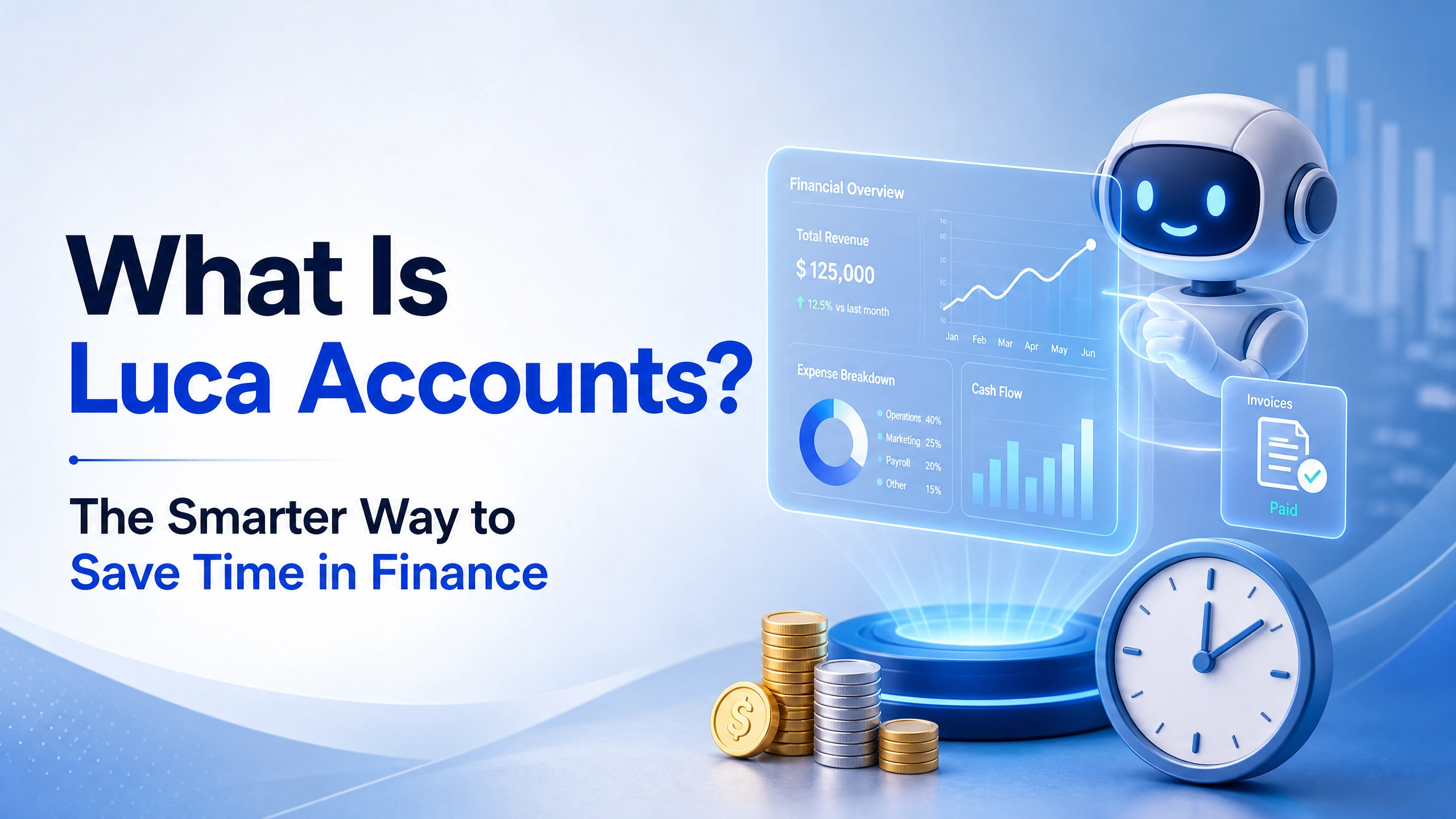
Discover how Luca Accounts, the AI-powered accounting assistant inside AI Work App, helps businesses automate bookkeeping, manage expenses, generate reports, and save time on financial tasks.
Key Takeaways
- Luca is an AI-powered accounting and financial assistant available within AI Work App that helps simplify bookkeeping and financial management.
- The platform uses conversational AI to turn plain-text financial inputs into organized accounting records, making it easier for non-accountants to manage finances.
- Luca helps businesses automate repetitive tasks such as bookkeeping, expense tracking, invoice management, and financial reporting.
- Businesses can use Luca Accounts to gain faster insights into spending habits, cash flow, and overall financial performance through automated visual reports.
- By reducing manual admin work and centralizing financial workflows, Luca helps businesses save time, stay organized, and improve productivity.
Managing business finances can quickly become overwhelming, especially for small businesses, startups, freelancers, and growing teams balancing multiple responsibilities. Tasks like bookkeeping, expense tracking, invoice management, and financial reporting often require hours of manual work, taking time away from core business operations.
To simplify these workflows, more businesses are turning to AI-powered financial tools that reduce administrative work and make accounting more accessible.
Luca is an AI-powered accounting and financial assistant available inside the AI Work App. It helps users automate bookkeeping, organize financial records, manage expenses and invoices, and generate reports through conversational AI workflows.
This guide explores how Luca works, its key features, and how it helps businesses simplify financial management.
What Is Luca Accounts?
Luca Accounts is an AI-powered accounting assistant built within the AI Work App ecosystem. Unlike traditional accounting software that often requires manual setup and accounting knowledge, Luca focuses on simplifying bookkeeping through conversational AI and workflow automation.
At its core, Luca is designed to help businesses save time by reducing the amount of manual work involved in managing financial records. Users can provide financial information in plain language, and it helps translate those inputs into organized accounting records automatically.
For example, instead of manually entering transaction data into spreadsheets or complex accounting software, users can interact with Luca conversationally. The AI then organizes and structures the information in a way that simplifies bookkeeping and reporting.
This approach makes financial management much more approachable for people who may not have formal accounting training.
Luca Accounts Is Especially Useful For:
- Small business owners
- Freelancers and consultants
- Startups
- Entrepreneurs
- Finance teams
- Non-accountants managing business finances
Many small businesses cannot afford large accounting departments, which means financial management responsibilities often fall on founders or operational teams. Luca helps reduce some of that workload by automating repetitive accounting tasks and centralizing financial workflows.
Its goal is simple: make accounting easier, faster, and less stressful for modern businesses.
Why Traditional Accounting Workflows Take So Much Time
Many businesses still rely heavily on manual accounting processes. While those systems may work at first, they often become inefficient as operations grow and transaction volumes increase.
Manual Data Entry Creates Bottlenecks
One of the biggest challenges with traditional bookkeeping is manual data entry. Finance teams often spend hours entering transactions, organizing receipts, and categorizing expenses manually.
This process is not only time-consuming but also increases the likelihood of human error. Even small mistakes in bookkeeping can create reporting inconsistencies and financial confusion later.
For business owners already managing multiple responsibilities, manual bookkeeping can quickly become exhausting.
Spreadsheets Become Difficult to Maintain
Spreadsheets remain one of the most commonly used financial management tools for small businesses. While they are flexible, spreadsheets become difficult to manage as financial data grows.
Over time, businesses may experience:
- Broken formulas
- Duplicate entries
- Missing financial records
- Version conflicts
- Inconsistent reporting
As operations become more complex, spreadsheet-based accounting workflows can create unnecessary administrative stress.
Financial Data Often Becomes Disconnected
Many businesses use separate tools for invoices, expenses, bookkeeping, and reporting. This creates fragmented workflows where important financial information becomes scattered across multiple systems.
When data is disconnected, teams often waste time switching between tools just to gather accurate financial information.
Reporting Can Be Slow and Inconsistent
Traditional financial reporting often requires manually collecting information from multiple sources before generating reports. This delays access to important insights like cash flow trends, spending patterns, and financial performance.
Without real-time visibility into financial data, businesses may struggle to make fast and informed decisions.
What Luca Accounts Can Do
Luca is designed to simplify many of these financial management challenges through AI-powered automation and conversational workflows.
Automate Bookkeeping
One of Luca’s most valuable features is automated bookkeeping. Instead of manually entering every financial transaction, users can communicate naturally with the platform using simple text-based instructions.
Luca interprets the information and organizes it into structured financial records automatically.
This Helps Businesses:
- Reduce repetitive bookkeeping work
- Keep records more organized
- Reduce human errors
- Simplify financial tracking
For many small business owners, this removes one of the biggest frustrations associated with accounting.
Because Luca uses conversational workflows, users do not need advanced accounting knowledge to manage financial records effectively.
Manage Invoices and Expenses
Luca also helps businesses organize invoices, receipts, and expenses in a centralized environment.
Users Can:
- Track business spending
- Organize receipts
- Monitor invoices
- Log expenses
- Store financial documents
- Improve visibility into cash flow
Keeping everything in one place helps businesses stay more organized and reduces the chances of losing important financial records.
For freelancers, startups, and service businesses handling multiple invoices every month, this centralized approach can significantly reduce administrative overhead.
Generate Financial Reports Automatically
Financial reports are essential for understanding business performance, but preparing reports manually can take hours.
Luca simplifies this process by generating customizable and visual reports automatically.
Reports Can Include Insights Into:
- Spending patterns
- Business cash flow
- Expense trends
- Revenue performance
- Financial activity over time
Instead of manually building spreadsheets and reports, users can access financial insights much faster.
This allows businesses to make better-informed decisions without waiting for lengthy accounting processes.
Connect Finance Workflows Inside AI Work App
Because Luca operates within AI Work App, users can integrate financial workflows with other AI-powered operational tools inside the same workspace.
This Helps Teams:
- Centralize workflows
- Improve operational efficiency
- Reduce switching between multiple platforms
- Keep data connected
- Streamline internal processes
Rather than functioning as standalone accounting software, Luca becomes part of a larger AI-driven productivity ecosystem.
This integrated environment can help businesses improve collaboration and simplify day-to-day operations.
How Luca Accounts Helps Businesses Save Time
One of Luca’s biggest advantages is its ability to reduce the amount of time businesses spend managing finances manually.
Less Administrative Work
Bookkeeping and financial organization often involve repetitive tasks that consume valuable hours every week.
Luca helps automate many of these workflows, including:
- Organizing transactions
- Categorizing expenses
- Logging financial data
- Tracking invoices
- Creating reports
This allows business owners and finance teams to focus more on strategy, growth, and customer operations instead of paperwork.
Easier Financial Management for Non-Accountants
Many traditional accounting systems are designed primarily for finance professionals, which can make them intimidating for non-accountants.
Luca simplifies the experience by allowing users to manage financial tasks conversationally.
This Is Especially Helpful For:
- Startup founders
- Freelancers
- Consultants
- Independent professionals
- Small business owners
Users do not need to understand complex accounting terminology to stay organized.
By reducing complexity, Luca makes accounting more approachable for everyday business users.
Faster Access to Financial Insights
Real-time access to financial information helps businesses make faster and smarter decisions.
Because Luca updates records and reports automatically, users can quickly monitor:
- Cash flow
- Spending activity
- Budget performance
- Expense trends
- Financial summaries
This visibility allows businesses to respond more quickly to operational changes and financial risks.
Real-World Ways Businesses Use Luca
Freelancers Managing Client Invoices
- Tracking payments
- Organizing receipts
- Simplifying tax preparation
Startups Automating Bookkeeping
- Reducing admin workload
- Keeping lean operations organized
- Monitoring cash flow in real time
Small Businesses Tracking Expenses
- Managing operational spending
- Keeping records centralized
- Improving visibility into finances
Consultants and Agencies Generating Reports
- Creating faster financial summaries
- Monitoring profitability
- Organizing client-related expenses
Key Benefits of Luca
- Saves Valuable Time:
Automation significantly reduces the time spent on repetitive bookkeeping and financial administration. - Simplifies Accounting Workflows:
Conversational AI makes accounting more accessible for users without financial training. - Improves Financial Organization:
Centralized workflows help businesses keep invoices, expenses, and records organized. - Enhances Visibility Into Financial Performance:
Automated reporting provides clearer insights into spending habits and business performance. - Supports Business Productivity:
Because Luca accounts operates inside the AI Work App, businesses can connect financial management with broader operational workflows.
Realistic Expectations for AI Accounting Tools
AI Still Requires Human Review
Luca can automate bookkeeping workflows and organize financial data more efficiently, but businesses should still review records regularly for accuracy. AI accounting tools help reduce repetitive work, but they are not a complete replacement for accountants, tax professionals, or financial oversight.
Accurate Results Depend on Clear Financial Data
AI-powered bookkeeping systems perform best when transaction details, receipts, and expense records are properly organized. Incomplete or inconsistent financial inputs may lead to incorrect categorizations or reporting inconsistencies.
Teams May Experience a Learning Curve
Businesses transitioning from spreadsheets or traditional accounting systems may need time to adapt to conversational AI workflows. Establishing consistent financial processes remains important, even when automation is involved.
AI Accounting Tools Have Operational Limits
Luca is designed to streamline everyday financial administration such as expense tracking, bookkeeping organization, invoice management, and reporting. Businesses with advanced tax, compliance, payroll, or enterprise accounting requirements may still need specialized accounting software or professional financial support.
Why Businesses Are Still Exploring AI Finance Tools
Despite these limitations, many businesses are adopting AI-powered financial assistants because they can reduce administrative workload, simplify financial organization, and improve access to real-time financial insights.
Who Should Use Luca?
Luca is designed for businesses and professionals looking for a simpler and more efficient way to manage financial operations.
Small Business Owners
Small business owners often handle bookkeeping themselves, especially during the early stages of growth. Luca helps reduce the administrative burden associated with managing finances manually.
Freelancers and Consultants
Independent professionals can use Luca to track expenses, manage invoices, and organize financial documents more efficiently.
Startups
Startups typically operate with lean teams and limited resources. AI-powered bookkeeping can help reduce operational overhead while improving organization.
Non-Technical Users
Because Luca relies on conversational AI instead of complicated accounting workflows, it is especially useful for people without accounting or technical experience.
Luca vs Traditional Accounting Software
| Feature | Traditional Accounting Software | Luca |
| Data Entry | Manual | Conversational AI |
| Bookkeeping | Time-consuming | Automated |
| Reporting | Manual setup | Auto-generated |
| User Experience | Complex | Beginner-friendly |
| Workflow Integration | Limited | Connected inside AI Work App |
| Accessibility | Requires accounting knowledge | Easier for non-accountants |
Things Businesses Should Consider
While Luca offers several advantages, businesses should still evaluate whether the platform aligns with their operational needs.
Adapting to New Workflows
Teams moving from spreadsheets or legacy accounting systems may need time to adjust to AI-driven workflows.
AI Accuracy Depends on Clear Inputs
Like most AI tools, Luca performs best when users provide clear and accurate information.
Integration Requirements
Businesses should ensure the platform fits well with their existing accounting processes and operational systems.
Tips for Getting the Most Out of Luca
Businesses can improve their experience with Luca by following a few simple best practices.
Best Practices Include:
- Keeping financial records updated regularly
- Using clear transaction descriptions
- Reviewing reports frequently
- Organizing receipts properly
- Integrating Luca into everyday workflows
Consistent habits can help businesses maximize the benefits of automation and maintain cleaner financial records.
FAQs
What is Luca Accounts used for?
Can Luca automate bookkeeping and expense tracking?
Do I need accounting experience to use Luca?
What types of financial reports can Luca generate?
Who should use Luca Accounts?
Conclusion
Managing business finances no longer needs to involve endless spreadsheets, manual bookkeeping, and time-consuming administrative work.
Luca helps modern businesses simplify accounting by combining conversational AI with financial automation inside AI Work App. From bookkeeping and expense management to invoice organization and financial reporting, the platform is designed to reduce complexity and save valuable time.
As AI-powered business tools continue evolving, platforms like Luca are helping companies move away from outdated accounting workflows and toward smarter, more efficient financial management systems.
For businesses looking to reduce administrative workload, improve financial organization, and gain faster access to insights, Luca offers a more accessible and modern approach to bookkeeping and finance management.